Ash dieback in the Mendips
Ash dieback has been through Somerset hard. If you have an ash in the garden, it's worth knowing what you're looking at.
What it is
A fungal disease that blocks the tree’s water transport. It arrived in Britain a little over a decade ago and has spread through most of the country. Most infected ash die; a small proportion show some tolerance and are worth keeping an eye on rather than felling straight away.
Ash is one of the most common trees in this part of Somerset: in hedgerows, on field boundaries and in gardens, which is why it’s so visible here.
What to look for
- A thinning crown, especially at the top of the tree.
- Dead tips on the ends of branches while the rest of the tree still has leaves.
- Leaves turning black and hanging on rather than dropping.
- Diamond-shaped lesions on the bark where a branch meets the stem.
It’s easiest to see in mid to late summer, when a healthy ash should be in full leaf and an infected one clearly isn’t.
Why it becomes a safety problem
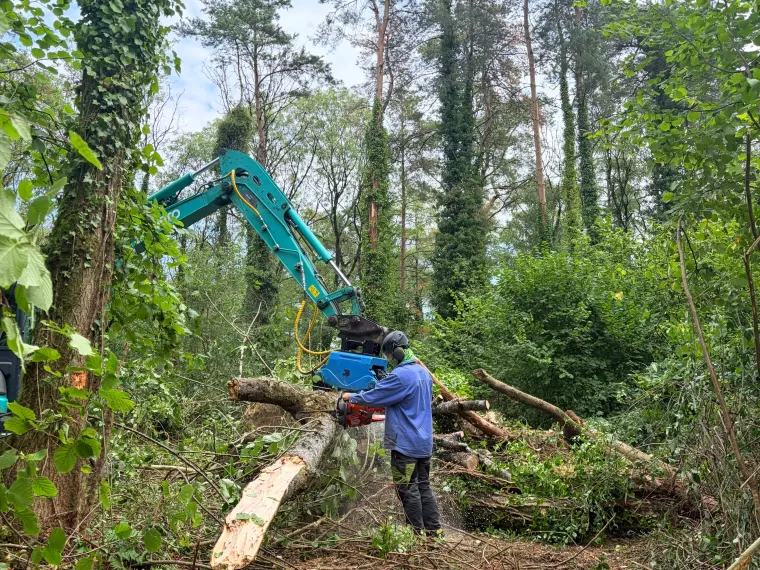
An infected ash goes brittle. Dead ash sheds limbs without warning and can fail at the base with very little sign beforehand. That’s also what makes it dangerous to work on: an ash left too long has to be dismantled with a crane or a MEWP rather than climbed, which costs considerably more than dealing with it while it’s still sound.
This is the main reason not to wait and see with an ash that’s near something it could damage.
If your ash is affected
Where it’s away from anything it can hurt, a dying ash is worth leaving. Standing deadwood is genuinely good habitat, and there’s no obligation to remove it. A dead ash in the middle of a paddock is doing no harm at all.
Where it overhangs a house, a road, a drive or a garden you actually use, it needs dealing with, and sooner is both safer and cheaper than later.
What I’d advise
Get it looked at while it’s still climbable. I’ll tell you honestly whether yours needs doing now, can wait a season, or should just be left where it is. Not every ash with dieback is an emergency, and I’d rather say so than sell you a removal you don’t need.
Other species worth watching locally: beech in dry summers, oak for decline in older trees, and sycamore and willow for storm damage where they’ve grown large and top-heavy.
Worried about an ash?
Send a photo of the crown and I'll tell you what I think.